Beyond Business as Usual
Osmobilis Limited was formed to mobilise the milk concentrate solution to the New Zealand milk collection market by combining the very best individuals that have the skill, knowledge, experience, and passion in milk concentrate technology, truck design, operational efficiency and optimisation and quality systems to successfully deliver this solution. All shareholders of Osmobilis have, or still are working within the dairy sector in their area of expertise. Scott Crampton, developed and grew the Hilton Haulage milk collection operation from the ground up to the largest independent milk collection operation in New Zealand, challenging the traditions of milk collection where the predominant model was for dairy manufacturers to collect their own milk.
Scott Crampton has provided dedicated dairy solutions for over 15 years now and is without doubt a subject matter expert when it comes to collecting milk off farm. Scott has driven efficient gains over many years with the likes of High Productive Motor Vehicle (HPMV) in New Zealand by maximizing load sizes and reducing the number of trucks required for milk collection in New Zealand. Scott will be the Managing Director of Osmobilis Limited and will be responsible for executing the Osmobilis strategy for a more optimised milk collection solution.
Osmobilis will partner with an innovative Dairy Company to prove the process in New Zealand, and are currently in talks with multiple dairy companies, that have all showed a very high level of interest in this solution based on the key outcomes it delivers especially around reducing truck numbers and how it will contribute to their own decarbonisation strategies. The next progressive step for these interested parties is obtaining certification for use, which we have well underway and then having the ability to trial a working unit in their milk collection operation.
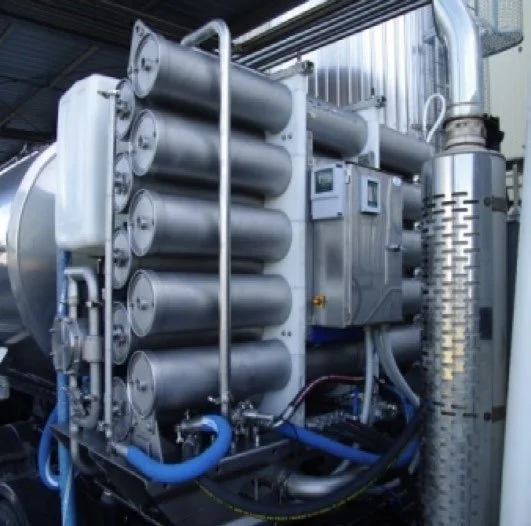
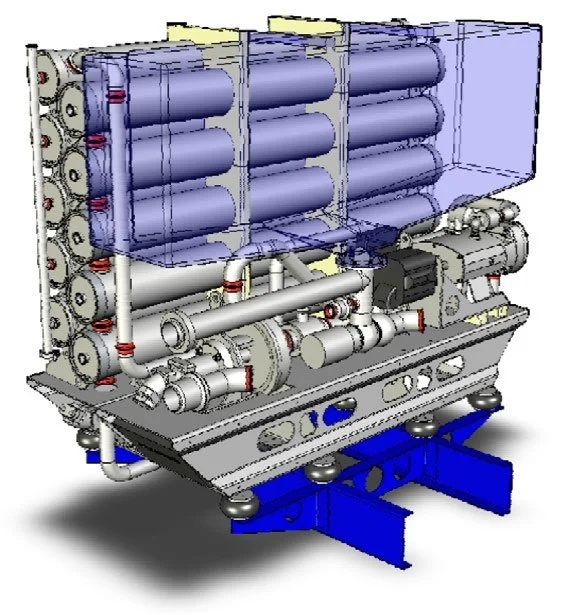
Osmobilis, working directly with the Pacific Process team have engineered a revised prototype based on the learnings that Pacific Process gained in Australia. We have developed detailed costings, coupled with real world data from milk collection zones. We have identified benefits exceeding $600,000 annually per MCS unit and reduction of trucks required from 5 to 3, in the collection zone modelled.
The MCS has the potential to revolutionise milk collection, particularly where the milk is of a greater distance from the processing facility.
To date, $450,000 has been invested to prepare the original prototype and now this requires government funding to produce a revised unit for product trials within New Zealand, and overall certification by MPI. Once approved, we are confident that the economics and intangible benefits will be self-evident and orders for additional units will flow.